
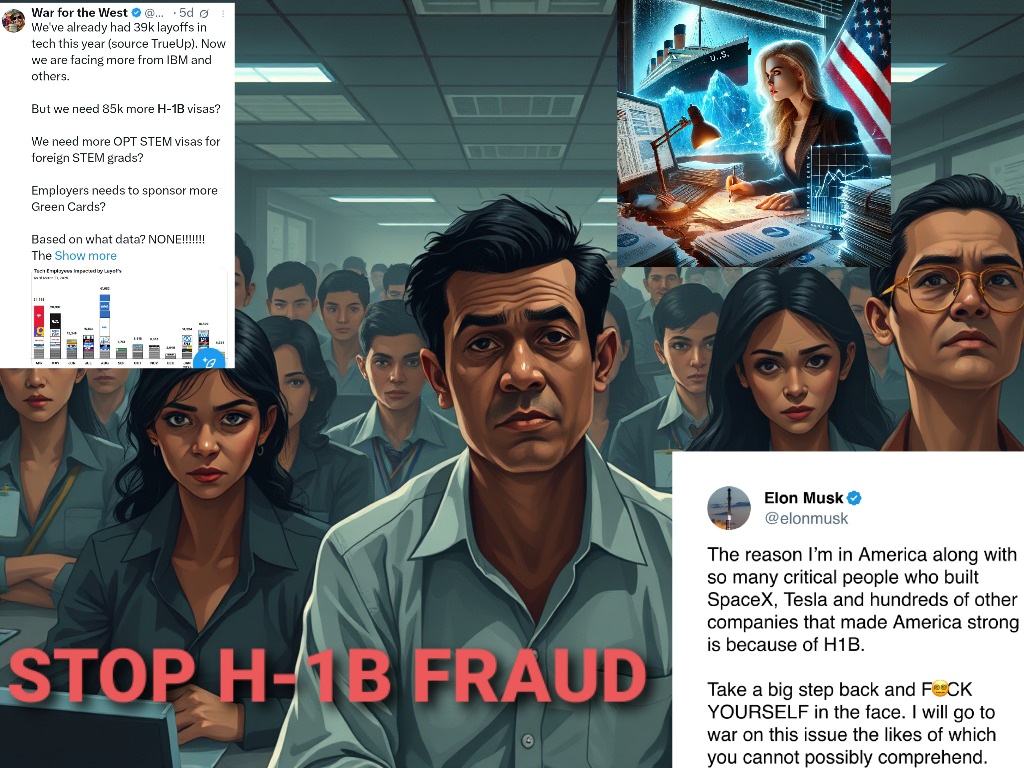
The H-1B visa program, designed to bring highly skilled foreign workers to the U.S. to fill specialized roles, has long been a lightning rod in debates over immigration and labor. On paper, it’s a tool to bolster American innovation by attracting top talent in fields like technology and engineering. In practice, however, it’s increasingly criticized as a mechanism that undermines American workers, suppresses wages, and prioritizes corporate profits over national interest. As of March 26, 2025, the conversation around H-1B abuse has reached a fever pitch, with voices on X and beyond exposing a system rife with exploitation—and not just of the foreign workers it imports.
The Promise vs. The Reality
The H-1B program is meant for “specialty occupations” requiring advanced expertise—think software engineers or data scientists. Yet, data and evidence suggests the program’s execution strays far from its intent. Companies, particularly in the tech sector, have been accused of using H-1B visas to replace American workers with cheaper labor, often under conditions that leave foreign workers vulnerable to exploitation.
On X, @USTechWorkers cuts to the chase:
This sentiment challenges the narrative that abuse is an aberration; instead, it posits that displacement is baked into the system’s design. Data backs this up: a 2017 CBS “60 Minutes” investigation found instances where U.S. workers trained their lower-paid H-1B replacements, a practice that’s legal but devastating for those affected.
Wage Suppression and Worker Precarity
One of the starkest criticisms is the program’s impact on wages. The Economic Policy Institute has reported that many H-1B workers earn below median wages for their roles, giving employers a financial incentive to favor them over Americans. This wage disparity doesn’t just hurt U.S. workers—it traps H-1B visa holders in a precarious limbo. Tied to their sponsoring employer, these workers risk deportation if they lose their job, making them less likely to push back against unfair treatment or low pay.
X user @RonHira, a researcher on labor policy, highlights the systemic failure:
Hira points to wage theft and replacement of U.S. workers as chronic issues, enabled by lax oversight. The Department of Labor requires employers to certify that H-1B hires won’t harm U.S. workers, but enforcement is spotty, and penalties are rare.
The Cultural Clash
Beyond economics, the H-1B debate has ignited a cultural firestorm. Critics argue that the program reflects a deeper failure to cultivate American talent, while supporters—like Elon Musk and Vivek Ramaswamy—insist it’s essential to compete globally.
Musk, who once held an H-1B visa, has defended it fiercely, arguing that America’s tech edge depends on foreign engineers. Ramaswamy, meanwhile, has blamed U.S. culture for prioritizing “mediocrity over excellence,” a stance that’s drawn both praise and ire.
Yet, on X, the backlash is palpable. @Noscito_Ryan writes:
This post reflects a growing frustration among some Americans who see the program as a floodgate for unqualified workers. Indians dominate the program—over 78% of top-paid H-1B recipients in recent years hail from India.
America First: Cancel H-1B Now
The H-1B program isn’t just flawed—it’s a direct affront to Americans’ birthright. Jobs in this country belong to those born here, period. We shouldn’t have to compete with foreign workers for what’s ours by privilege, nor should corporations be allowed to pawn off American opportunities to the lowest bidder. The solution isn’t reform—it’s cancellation. Scrap the H-1B program entirely and put Americans back at the front of the line. Every job filled by a visa holder is a job stolen from someone whose ancestors built this nation. We deserve preference in our own job market, because we’re American. That’s the only qualification that should matter.

 White-Collar Workers of America